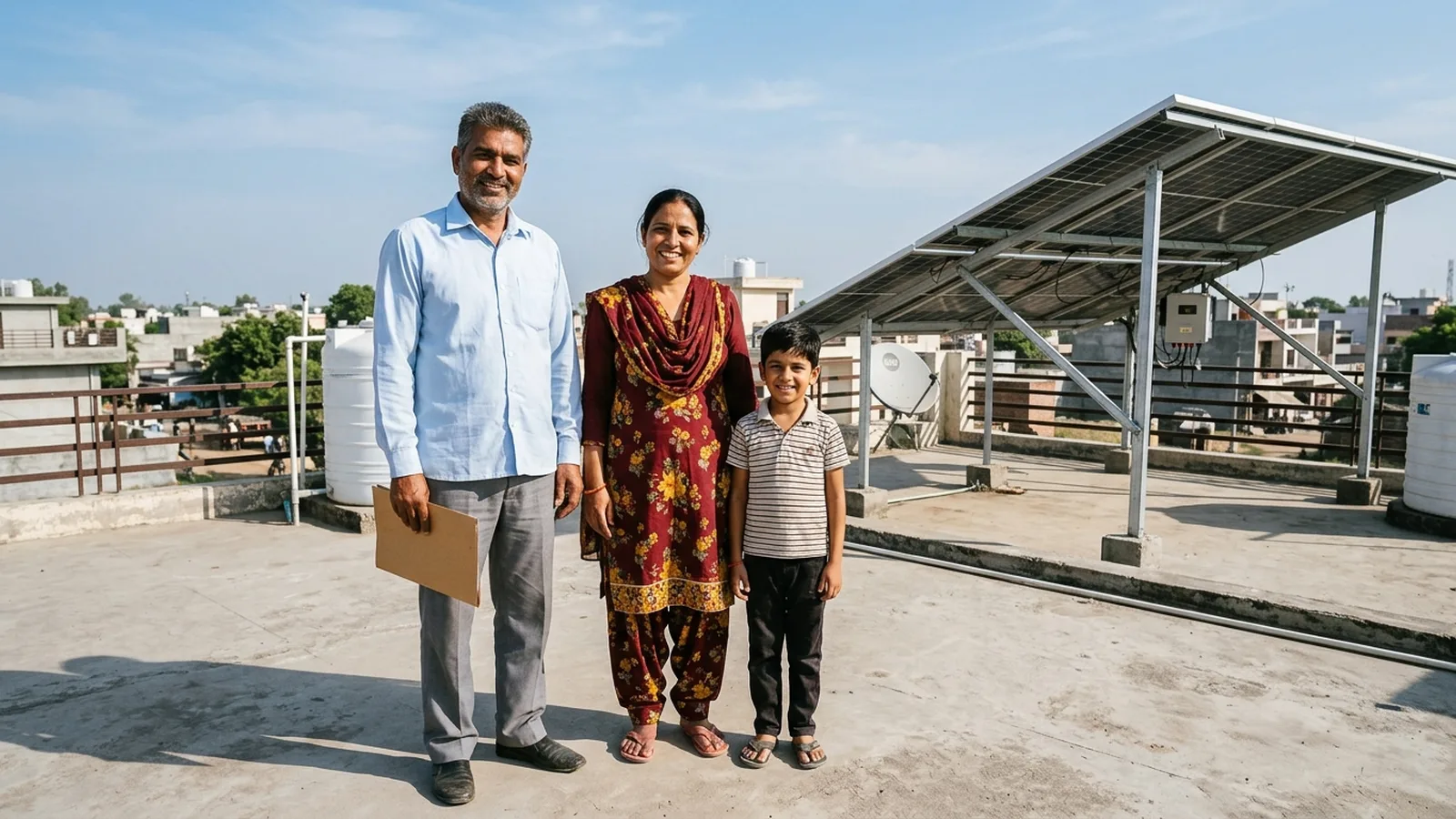


Quick answer: for most homes in Haryana with a regular bijli connection, on-grid solar is the best value — no battery, lowest cost, net metering and PM Surya Ghar subsidy up to ₹78,000. Choose hybrid if power cuts are a real problem and you want backup. Choose off-grid only where there is no reliable grid line, like a farm or remote site.
When families ask us "kaunsa solar lagwayein?", the answer depends on two things: how often the light goes, and what you want to run during a power cut. Let's compare the three types in plain words.
What is on-grid solar?
On-grid solar is connected to the DISCOM's line through a net meter. In the day, your panels run the house first; extra units go to the grid and are credited to your bill. At night you use grid power as usual.
- No battery — so the lowest cost and almost no maintenance
- Eligible for PM Surya Ghar subsidy for homes (₹30,000 for 1 kW up to ₹78,000 for 3 kW+)
- Limitation: when the grid goes off, the system also switches off — this is a safety rule so no power flows into a line that linemen are repairing
What is hybrid solar?
A hybrid system is on-grid plus a battery. Panels charge the battery and run the house; extra power can still go to the grid. When the light goes, the battery keeps your chosen load running — fans, lights, fridge, Wi-Fi.
- Backup during power cuts — the main reason to choose it
- Costs more than on-grid because of the battery and hybrid inverter
- Batteries need replacing during the life of the plant, so plan for that cost
What is off-grid solar?
Off-grid solar works completely on its own with batteries — no connection to the DISCOM at all.
- Good for farms, tubewell rooms and remote sites where the line is weak or absent
- No net metering, so no bill credit
- Battery size must be planned carefully for night use and cloudy days
Side-by-side comparison
| Point | On-grid | Hybrid | Off-grid |
|---|---|---|---|
| Battery | No | Yes | Yes |
| Works in power cut | No | Yes | Yes |
| Net metering / bill credit | Yes | Yes | No |
| Upfront cost | Lowest | Higher | Higher |
| Maintenance | Very low | Battery care | Battery care |
| Best for | Most homes | Homes with long cuts | No-grid sites |
What about the subsidy?
PM Surya Ghar subsidy is for grid-connected rooftop systems with a net meter. A fully off-grid system does not get this subsidy, and the subsidy amount is fixed by system size — the battery is an extra cost. Planning a hybrid system and want the subsidy too? Ask us during the survey and we will explain what applies to your connection.
Lithium or lead-acid battery?
If you choose hybrid or off-grid, the battery is the big decision. Lithium batteries cost more but last longer, need no water top-up and take less space. Lead-acid batteries cost less upfront but need more care and replacement sooner. We help you size the battery for the load you actually want to run.
Our simple rule
- Light rarely goes, you want the biggest bill saving → on-grid
- Long power cuts, you need backup for essentials → hybrid
- No reliable grid line at all → off-grid
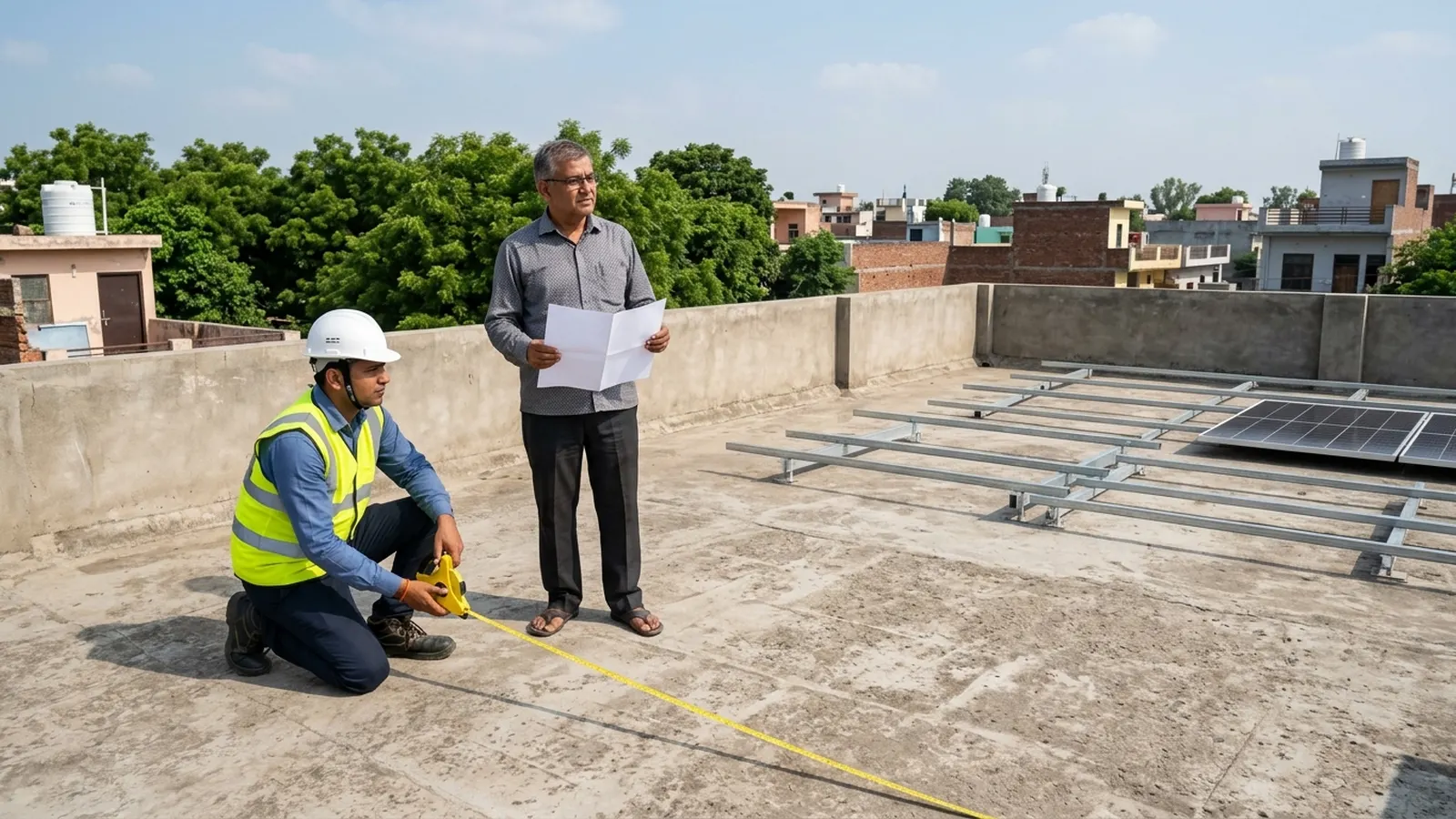
Not sure? Use our savings calculator to see the right size for your bill, read how many kW you need, or book a free site survey — our engineer will check your roof, load and power-cut pattern and suggest the right type, in writing.